Tree Doctor Services in Grand Rapids, MI
Grand Rapids Tree Service provides expert tree doctor services with ISA-certified arborists who diagnose and treat diseased, declining, and pest-infested trees on commercial and residential properties throughout Kent County. Our tree health specialists identify problems including Dutch elm disease, oak wilt, emerald ash borer infestations, and fungal infections that threaten tree vitality. We utilize advanced diagnostic techniques, soil testing, and tree health assessments to determine root causes of decline, then implement targeted treatments using deep root fertilization, trunk injections, and systemic insecticides to restore tree health and prevent further deterioration.
Our comprehensive tree care services include pest management for aphids, scale insects, and borers, disease treatment protocols, and nutrient deficiency correction through customized fertilization programs. We perform soil aeration, mycorrhizal inoculation, and root zone management to improve growing conditions for stressed trees. Whether you're dealing with leaf discoloration, premature defoliation, canker diseases, or unexplained branch dieback, Grand Rapids Tree Service delivers science-based solutions that address underlying issues. Our arborists create Plant Health Care (PHC) programs with regular monitoring, preventive treatments, and seasonal care recommendations to keep your valuable trees thriving, ensuring long-term landscape beauty and environmental benefits for your property.
The Process of a Tree Health Check-Up With a Tree Doctor
A tree health check-up is a step-by-step evaluation of a tree’s condition, risk level, and likely causes of decline. Instead of guessing based on one symptom, a certified arborist reviews the canopy, trunk, roots, and site conditions, then recommends next steps such as pruning, treatment, monitoring, cabling and bracing, or removal when necessary.
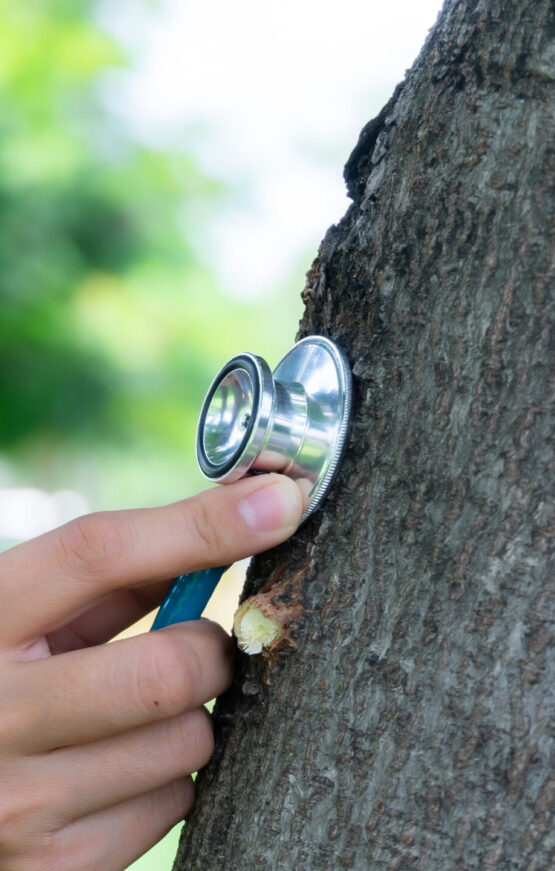
Visual Inspection
The visit typically starts with a walk-around assessment from multiple angles to understand the tree’s overall shape, lean, and canopy balance. The arborist checks the canopy for thinning, dead tips, smaller leaves, early leaf drop, and discoloration that can point to stress, disease, or root issues. Next, they examine branches and unions for weak attachments, included bark, rubbing limbs, and deadwood, which are common failure points during wind, snow, and ice. The trunk is inspected for cracks, splits, cavities, peeling bark, fungal growth, sap flow, and insect signs such as exit holes, frass, or visible activity.
Soil and Root Analysis
After the above-ground check, the arborist evaluates the root zone since many health issues start underground. They look for a visible root flare at the base of the trunk, since a buried flare can contribute to rot and girdling roots. They assess soil compaction from foot traffic, vehicles, or past construction, plus drainage and moisture patterns, since standing water or overly dry soil can weaken roots. When appropriate, they may perform a soil test to check nutrient levels and pH, then recommend amendments based on what the tree needs rather than applying generic fertilizer. They also check for root disturbance because these conditions can reduce stability and limit water and nutrient uptake.
Use of Advanced Technology
If symptoms suggest hidden problems, technology can help confirm what is happening inside the tree. A resistograph, or similar testing, can help detect internal decay by measuring wood resistance, which is helpful when the exterior looks solid but the interior may be compromised. Some arborists also use sonic tools, when available, to better understand internal density and identify potential voids. For taller trees, drones or high-zoom inspections can reveal dead tops, broken leaders, storm damage, and pest patterns in the upper canopy that are difficult to see from the ground.
Our Tree Doctor Services in Grand Rapids, MI
When a tree starts showing stress, the right diagnosis matters. Grand Rapids Tree Service provides tree doctor services for commercial and residential properties throughout Kent County, identifying the cause of decline and recommending practical treatments that protect tree health, safety, and long-term value.
Tree Health Inspections and Diagnosis
Our certified arborists perform a full tree health evaluation, looking at canopy density, leaf size and color, dieback, new growth, and any abnormal patterns that signal stress. We also inspect the trunk and bark for cracks, cavities, oozing, fungal growth, and past wound sites, plus the branch structure for weak unions, poor pruning cuts, and storm-related damage.
We assess the root flare and soil area around the tree to spot compaction, grade changes, excess mulch, poor drainage, and girdling roots that can slowly choke a tree. You get clear findings and a prioritized plan, which can include corrective pruning, cultural care changes, monitoring steps, or a treatment recommendation based on what is most likely driving the decline.
Tree Disease and Pest Management
If disease or insect activity is suspected, we identify symptoms such as spotting, scorch, premature drop, cankers, boring activity, and webbing. We consider species-specific issues, timing, and site conditions so the response targets the real cause, not just the visible symptoms. When needed, we remove infected limbs using proper pruning practices and sanitation to reduce spread to healthy tissue.
For pest pressure, we focus on integrated management and tree preservation. Depending on the situation, that can include reducing the source of infestation, improving tree vigor to help it defend itself, and using targeted treatment plans when appropriate. We also provide prevention guidance so recurring issues are less likely in future seasons.
Soil, Root, and Tree Vigor Treatments
Many tree problems start below ground, so we evaluate drainage, soil compaction, root zone space, and mulch depth to see whether the tree is getting enough oxygen, water, and nutrients. We look for common stress triggers like construction impact, damaged roots, lawn chemicals, and inconsistent watering patterns that can weaken trees over time.
Based on what we find, we recommend practical fixes that support recovery and long-term health. This can include root zone improvement, correcting mulch and watering practices, reducing soil compaction, and applying nutrient support when it makes sense for the tree’s condition and the season. The goal is to improve the growing environment so the tree can stabilize, regain vigor, and keep thriving.
Why Choose Grand Rapids Tree Service for Tree Doctor Services?
01
ISA-Certified Arborists and Science-Based Diagnosis
Our ISA-certified arborists do more than guess at symptoms. We perform detailed tree health assessments and use advanced diagnostics, including soil testing when needed, to identify the root cause of decline so the treatment plan is accurate and effective.
02
Targeted Treatments That Protect Valuable Trees
We treat common Kent County threats like Dutch elm disease, oak wilt, emerald ash borer, and fungal infections using proven methods such as deep root fertilization, trunk injections, and systemic insecticides when appropriate. We also address pest issues from aphids, scale insects, and borers using practical, site-specific solutions that support long-term tree vitality.
03
Plant Health Care Programs for Long-Term Results
Tree issues often return if conditions do not improve. Our Plant Health Care programs focus on prevention and recovery through root zone management, soil aeration, mycorrhizal inoculation, nutrient correction, and regular monitoring. You get seasonal recommendations and ongoing support to keep trees healthy, safe, and attractive year after year.
FAQs About Tree Doctor Services
A tree doctor, also called a certified arborist, diagnoses and treats tree health problems including diseases, pest infestations, nutrient deficiencies, and environmental stress. They conduct comprehensive health assessments, identify pathogens and insects, perform soil analysis, and develop treatment plans using techniques like trunk injections, deep root fertilization, pest management, and pruning. Grand Rapids Tree Service employs ISA certified arborists who use advanced diagnostic tools to evaluate tree vitality and implement science-based treatments to restore health and prevent decline.
Common signs include premature leaf drop, discolored or wilting foliage, dead branches in the canopy, fungal growth on bark or roots, cracks or splits in the trunk, sparse or stunted leaves, and excessive sap or oozing. Visible pests like borers, unusual bark texture, peeling bark, root decay, and leaning trunks also indicate health problems. Grand Rapids Tree Service offers professional tree health assessments where our certified arborists examine symptoms, identify underlying causes, and recommend appropriate treatments or removal if necessary.
Tree doctors can often save trees showing early to moderate decline through targeted treatments like disease management, pest control, proper pruning, deep root fertilization, and soil amendments. Success depends on the extent of damage, tree species, and underlying cause. Trees with minor stress, nutrient deficiencies, or treatable diseases respond well to intervention. However, trees with extensive root rot, advanced disease, severe structural damage, or over 50% canopy dieback may be beyond saving and require removal for safety.
Common tree diseases in Michigan include oak wilt affecting red and white oaks, Dutch elm disease devastating American elms, emerald ash borer killing ash trees, apple scab on fruit trees, and anthracnose on maples and sycamores. Other prevalent issues include tar spot on maples, fire blight on ornamentals, verticillium wilt, powdery mildew, and various fungal cankers. Grand Rapids Tree Service specializes in diagnosing and treating these region-specific diseases using proven methods including preventive treatments and systemic injections.
Tree health assessments typically cost $75 to $300 depending on property size, number of trees evaluated, and diagnostic complexity. Basic consultations for single trees usually run $75-$150, while comprehensive assessments examining multiple trees, soil testing, and detailed diagnostic reports can cost $200-$300 or more. Grand Rapids Tree Service often provides free basic evaluations with treatment estimates, and our ISA certified arborists use resistograph testing, soil analysis, and visual inspections to accurately diagnose problems and recommend cost-effective solutions.